
Sex Offender Checks in Leon County
The Texas Public Sex Offender Registry is the main public channel for a Leon County sex offender search. Texas DPS manages the database. It supports both name and geographic queries, so the reader can start with a person or with a place. The registry is free, but its conditions of use must be accepted. Results should be treated as public-safety information, not as a full criminal history. An absent result does not clear a person of criminal history, and a registry entry does not describe every court event involving that person.
Before searching, gather only details that help distinguish a possible match. A correct spelling, city, ZIP code, and address can narrow a place search. For a name query, first and last names are useful. Then compare the full profile rather than relying on the result list alone. Leon County residents can contact the sheriff when they need the local registration authority, want to report suspected noncompliance, or need to confirm how registration appointments are handled outside a city police jurisdiction.
The state and local channels have separate jobs. DPS publishes Texas registry records and operates the public search. A municipal police department or the Leon County sheriff serves as the local registration authority based on where the person lives. NSOPW broadens the public query beyond Texas. None of these channels supplies a complete Leon County case file. That file stays with the court clerk, and a registry search should not be used as a substitute for a certified disposition.
Choose the channel from the question being asked. Use DPS to search published Texas registration data. Call the local authority about registration procedure or a suspected compliance issue. Use NSOPW when another state may be involved. Contact a court clerk for the filed charge, judgment, or sentence. Keeping those records separate avoids a common error in criminal-history research: reading one specialized public record as though it described the entire justice history.
Select Leon County Registry Results
The registry gives Leon County searchers more than one route. A county filter is useful when a street address is unknown or when a municipality name could exclude an address outside city limits. City and ZIP fields can then tighten the result. Geographic mode adds an address and radius control. Name mode is better when the individual is known but the current location is not. These paths answer different questions, so a broad county query and a precise name query may produce different result sets.
The official Texas registry search screen shows the controls without centering the search on any particular registrant.
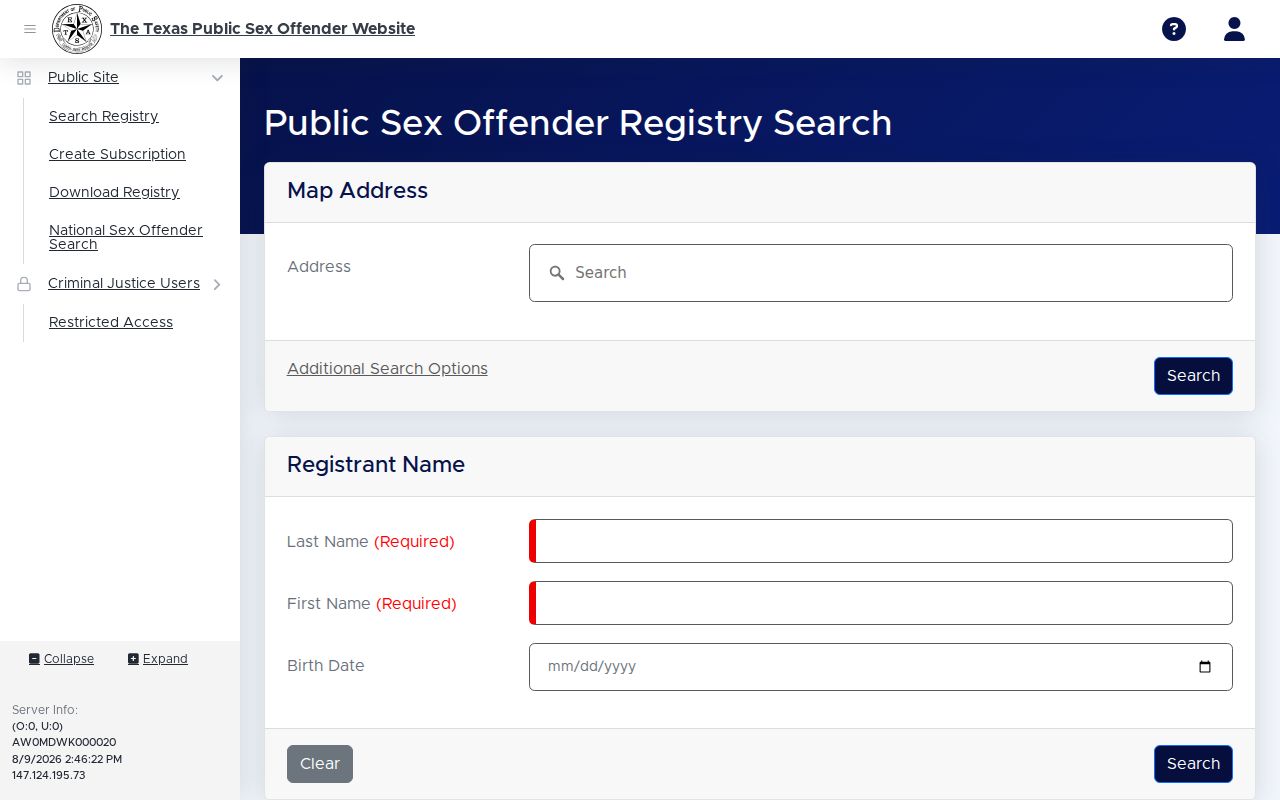
That form is the proper starting point for selecting LEON in the county field, using name mode, or building an address-based search.
Start broad when a detail may be stale. A last name can find records that a narrow address query misses after a move. County mode can capture registered locations outside Buffalo, Centerville, or Jewett city limits. If too many results appear, add a first name, city, or ZIP code. Then open each possible profile and compare more than one identifier. This method reduces the risk of tying a similar name to the wrong Leon County resident.
How to Search the Texas Public Sex Offender Registry
Texas DPS publishes the search interface and the public profile data authorized by Code of Criminal Procedure Chapter 62. The most reliable approach starts with a clear question, such as whether a known name appears or which published addresses fall within a chosen area. The steps below keep the search broad enough to catch a likely record, then use profile details to reduce mistaken identity.
- Open the Texas registry search and read the conditions of use before accepting them.
- Choose name or geographic mode. Enter a name, or use an address, city, county, ZIP code, and available radius controls.
- Review the result list without assuming that a similar name or nearby map pin is a confirmed match.
- Open the complete profile and compare the photograph, aliases, physical description, offense, address, and verification details.
| Field Label | Type | Required | Notes |
|---|---|---|---|
| Search type | Tabs or radio control | Yes | Choose name or location and geographic mode. |
| Last Name | Text | Name mode | Use the spelling known to the searcher. |
| First Name | Text | No | Add it to narrow name results. |
| Address | Text | Geographic mode | Enter the street or location used for the area search. |
| City | Text or dropdown | No | Enter the municipality when useful. |
| County | Dropdown | No | Select LEON for a county-wide filter. |
| ZIP Code | Text | No | Use a five-digit ZIP code. |
| Radius | Dropdown | Geographic mode | Use the options shown by the current portal. |
| Search / Clear | Buttons | Not applicable | Run the query or reset the fields. |
A wide Leon County registry query can produce several profiles. Narrowing the list is useful, but removing too many fields can be just as important when a spelling or address is uncertain.
Search controls can change as DPS updates the portal. Use the field labels and options shown on the live form. Do not assume that partial names, radius choices, or map boundaries work like a commercial people-search service. If a first attempt fails, clear the form and try one sound change at a time. This makes it easier to see whether the name, place, or filter caused the empty result.
Read Leon County Registry Maps Carefully
A map pin is a search aid, not proof that a person is standing at that spot. Texas DPS warns through the structure of its published data that an address reflects registration information. The map itself can be approximate. Street spelling, rural routes, municipality labels, and ZIP boundaries can also affect a geographic search in Leon County. Open the linked profile before connecting a pin to a name, household, or current presence.
The Texas registry profile interface demonstrates why the profile matters more than the pin alone.
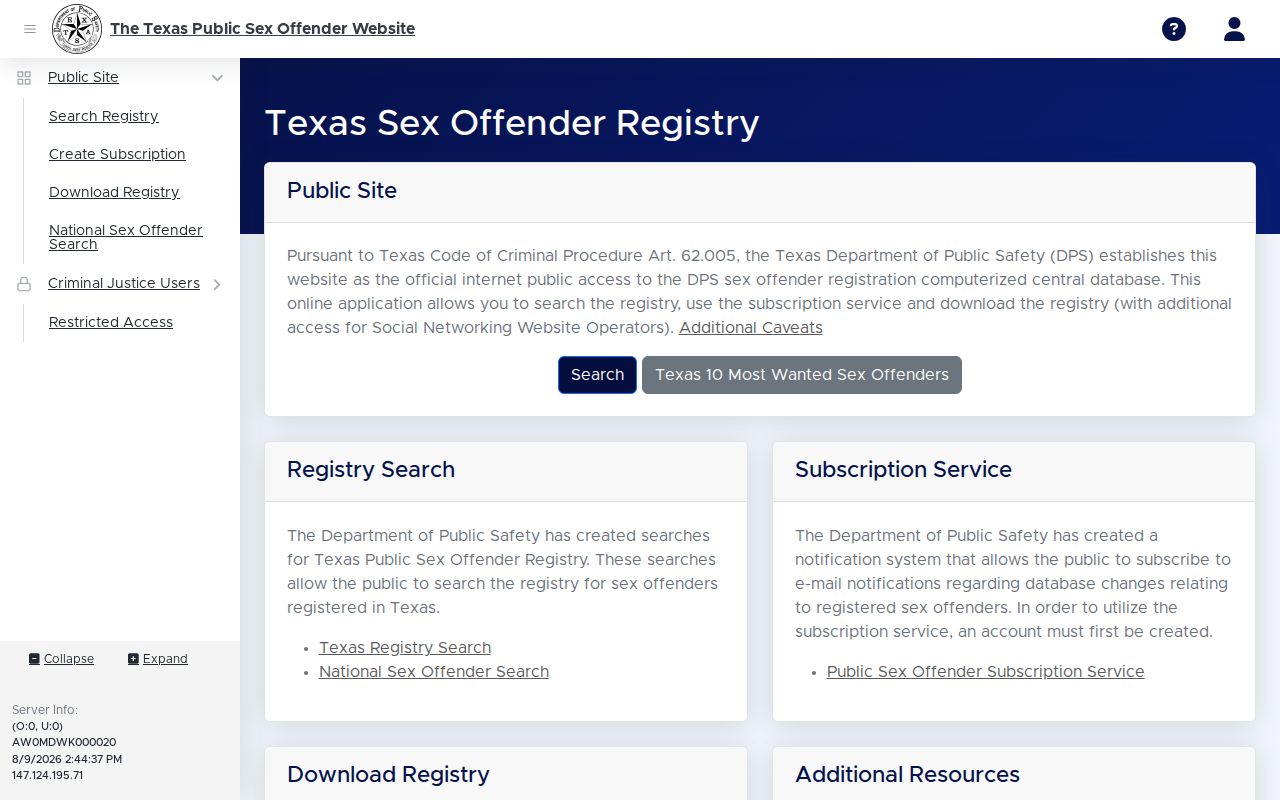
The full record brings together identity, address, offense, and compliance fields that cannot be judged from a map marker.
When information appears stale, do not confront anyone. Save the public record details and contact the law-enforcement authority responsible for the location. Use emergency services only when there is an immediate danger. A routine discrepancy, such as an old-looking address or an unclear verification date, belongs with the local registration authority.
Rural addressing makes this caution useful in Leon County. A mailing city may not match the closest incorporated city, and a county road location may sit outside a municipal police jurisdiction. The registry's location text and the authority responsible for that address matter more than an informal neighborhood name. Readers should also avoid treating the absence of a nearby dot as a promise that no registrant lives in the broader area. Public visibility and map placement follow the governing record and law.
Inside a Registry Profile
A Texas public profile groups several ways to test a possible match. A photograph and physical description help separate people with similar names. Aliases may explain why a name search did not work as expected. Address and status fields describe the published registration record, while offense details show the reportable event. Some profiles also include vehicle information and scars, marks, or tattoos. DPS or registry identifiers can help a law-enforcement agency identify the exact entry when a concern is reported.
| Name & Aliases | Full registered name and alternate names published by the registry. |
|---|---|
| Photo & Physical Description | Photograph plus sex, race, height, weight, hair, eyes, and birth information as law permits. |
| Registered Address | Published address or location description, with secondary location categories when included. |
| Offense & Statute | Reportable offense, jurisdiction, conviction or adjudication date, disposition, and authorized victim categories. |
| Vehicles & Identifying Marks | Vehicle data and scars, marks, or tattoos when the public profile includes them. |
| Risk Information | A Texas risk level may appear, but it is not a federal SORNA tier. |
| Registration Status | Compliance status and verification dates where DPS publishes those fields. |
No single field proves identity. Compare several independent details and keep the limits of each field in view. An address does not establish current presence, and an old conviction description does not supply the full court file. For the charging documents and disposition behind an offense, the appropriate clerk remains the source of the case record.
Read dates in context. A conviction or adjudication date concerns the reportable case, while a verification date concerns the later registration process. They do not answer the same question. Status language can also change after the responsible authority updates the record. If a profile supplies an alias, vehicle, or identifying mark, use it only to distinguish records. It is not an invitation to follow, photograph, or confront the person shown.
Offense fields also need care. The public profile may show the reportable offense, its statute and jurisdiction, the disposition date, and authorized victim age or sex categories. Those fields summarize the registration basis. They do not reproduce every pleading, hearing, amendment, or sentence document. A reader tracing the legal outcome should use the cause number or court details to request the underlying file from the proper clerk.
Texas Registration Levels and Requirements
Texas does not fit its registration duties into a generic public Tier I, II, and III chart. Code of Criminal Procedure Chapter 62 controls who must register, how duration is calculated, and how often verification occurs. Article 62.101 identifies lifetime and generally ten-year duties. Article 62.058 sets verification rules. The offense, date, disposition, release from control, and any later court order can matter, so a public risk number should not be used as a shortcut for duration.
| Texas category | General duration | Verification |
|---|---|---|
| Listed lifetime offenses under Article 62.101(a) | Until death unless statutory relief applies | Ordinarily annual, subject to special rules |
| Other adult reportable convictions or adjudications | Generally ten years after discharge or release from control, as the statute calculates it | Annual around the birthday unless a special rule applies |
| Specified repeat sexually violent histories | Duration follows the governing offense category | Every 90 days under the special verification rule |
| Juvenile and other special categories | May change under statute or court order | Case-specific |
The table is a framework, not an individual ruling. Relief, juvenile status, and special statutory provisions can alter duration or public visibility. The registry profile and the responsible authority provide the current published status.
Article 62.058 generally ties annual verification to the person's birthday. The research also identifies a 90-day reporting rule for people with specified multiple sexually violent convictions or deferred adjudications. This is why frequency cannot be guessed from a broad offense label. Article 62.101 calculates the duty by legal category and release from control, and the public profile reflects the status DPS is authorized to show.
A ten-year duty does not necessarily start on the conviction date. The general framework measures from discharge or release from control as the statute directs. Likewise, lifetime registration does not mean every public field will remain unchanged. Addresses, vehicles, verification dates, and compliance status can be updated as later reports reach the system.
Texas also treats juvenile and other special categories as case-specific. A court order or statutory provision may affect duration or whether information is public. That nuance is lost in charts that force every record into three federal-style tiers. For a Leon County registry result, use the current DPS profile and Chapter 62 framework. Do not calculate an end date from a risk number, the offense date alone, or a label used by a different state.
Leon County Registry Searches Across States
A Texas search answers a Texas question. When a person has lived in another state, travels between jurisdictions, or is tied to an address outside Texas, use the Dru Sjodin National Sex Offender Public Website as the cross-state layer. NSOPW sends queries to participating public registries and applies its own conditions and CAPTCHA controls. Its results still depend on the information each jurisdiction makes public.
The national interface offers a useful second path for a Leon County safety search.
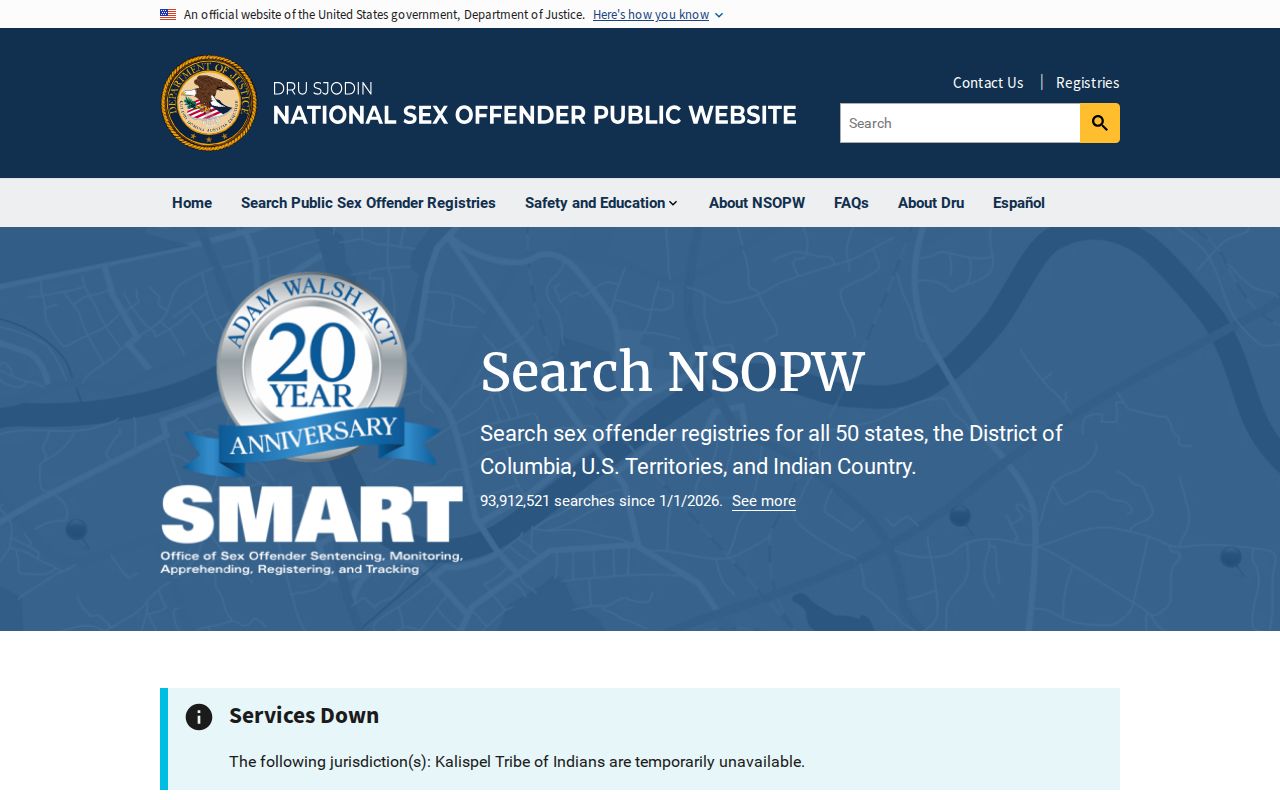
Use NSOPW to broaden geographic coverage, then open the originating jurisdiction's profile for the details and reporting contact.
Neither system is a general background check. Registry publication concerns reportable registration records. It does not replace a Texas DPS criminal-history product, a fingerprint-based review of one's own record, or a Leon County court file. The Leon County criminal court cases resource explains where filed charges and dispositions are held.
If NSOPW returns a possible record from another state, follow that result to its source registry. The originating jurisdiction controls its displayed fields, update cycle, and local reporting contact. A Texas DPS search should still be used for Texas addresses because it gives the direct state record. Comparing both routes is most useful when location history crosses a state line, not as a way to draw conclusions from duplicate or differently formatted entries.
Leon County Registry Risk Terms
Texas registry profiles may display a numeric risk assessment. That number should not be translated into a federal SORNA tier. The concepts serve different legal and administrative functions. Likewise, a public risk field does not by itself reveal how long registration lasts. Duration follows Chapter 62 and the person's qualifying history, not a three-row tier label borrowed from another state.
- Risk level
- A Texas assessment field that may appear on the public profile.
- Verification
- The required check-in process with the responsible local authority.
- Compliance status
- The registry's published indication of whether required registration information is current.
- SORNA tier
- A federal classification concept that is not interchangeable with a Texas numeric risk assessment.
These distinctions help prevent two common errors: assuming that a risk number sets the registration period, and assuming that every state uses the same public classification system. Read the Texas fields in their Texas context.
The offense information and statutory category offer a better starting point for understanding duration than the risk field. Even then, special relief, juvenile rules, and court orders may affect the result. For a public safety search, the useful task is to read what DPS currently publishes. Questions about a person's legal duty belong with the responsible authority or qualified counsel, not with an informal tier chart.
Community Notification and Lawful Use
Registry information supports personal, family, and community safety. It can help a Leon County resident understand a published address, recognize a person shown in an official notice, or report an apparent compliance problem to law enforcement. It does not authorize confrontation or punishment. If a profile appears wrong, stale, or inconsistent, report the concern to the authority responsible for that location. Give the official profile identifier and the observed discrepancy. Do not attempt to investigate at the address.
Misuse Is Unlawful: Texas Code of Criminal Procedure Chapter 62 bars using registry information to injure, harass, or commit a criminal act against a registrant or household. Use the data only for lawful safety purposes.
Call 911 only for an immediate threat. A suspected reporting violation or questionable registry field should go to the relevant Leon County police department or Sheriff's Office. That distinction keeps emergency lines open while giving the responsible agency enough detail to check the record.
Community awareness works best when the official information is read accurately and used calmly. Keep a record of the profile page and the date viewed if a later report is needed. Share safety concerns with the proper authority, not through public accusations. The law protects access to registry information for legitimate use while setting a clear boundary against threats, harassment, injury, and other criminal conduct.
A report is more useful when it is specific. Identify the registry name or published identifier, describe the field that appears inconsistent, state when the profile was viewed, and explain the observed issue without adding rumor. The local agency can then decide whether the matter falls within its jurisdiction and whether a verification step is needed. Emergency dispatch should remain reserved for conduct presenting an immediate threat.